Why Your Grip Gives Out Before Your Back Does on Pull-Ups
It’s common to assume pull-up progress stalls because the back isn’t strong enough yet, but for a lot of people, the hands simply give out first, well before the back muscles are anywhere near their actual limit.

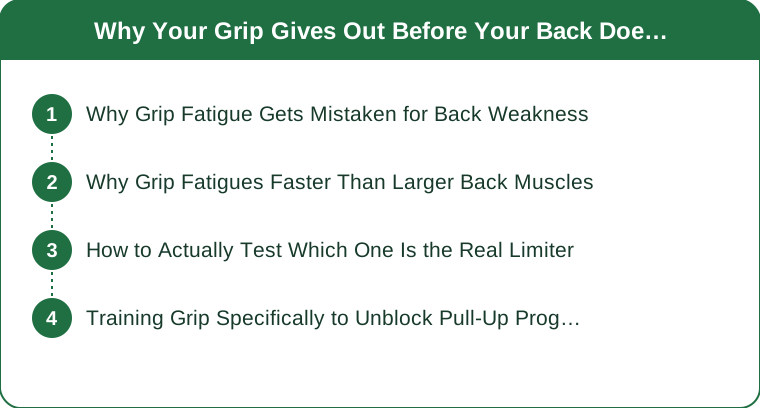
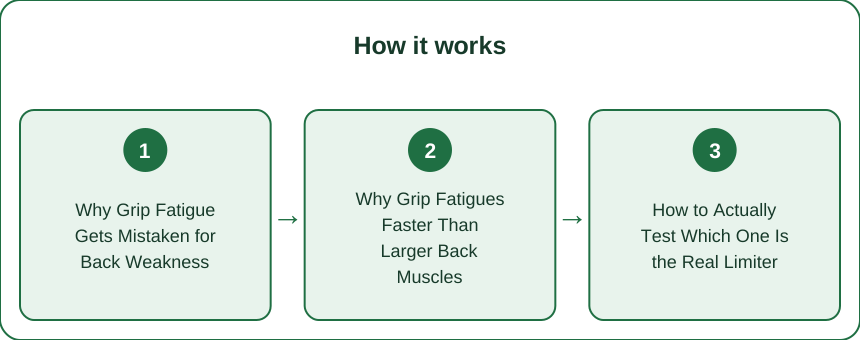
Why Grip Fatigue Gets Mistaken for Back Weakness
The misdiagnosis: a failed pull-up rep looking identical from the outside whether the cause is back fatigue or grip fatigue, which leads a lot of people to train more back volume when the actual limiter was never the back to begin with.
Why Grip Fatigues Faster Than Larger Back Muscles
The physiological reason: the smaller forearm muscles responsible for grip having far less total capacity and endurance than the large back muscles doing the pulling, meaning under sustained hang time, the grip simply runs out first by default.

How to Actually Test Which One Is the Real Limiter
The diagnostic check: testing a passive dead hang for time separately from pull-up attempts, since a hang time under twenty to thirty seconds strongly suggests grip is the bottleneck rather than back strength, which a pull-up test alone can’t isolate.
Training Grip Specifically to Unblock Pull-Up Progress
The targeted fix: dedicated dead hangs, farmer’s carries, and thicker-grip training building grip endurance specifically, which for grip-limited lifters unlocks more pull-up progress than adding more back-focused pulling volume would, and the frame (a failed pull-up looks the same whether grip or back gave out first — a separate dead hang test identifies which one is actually the bottleneck before wasting training volume on the wrong muscle group.)
It’s common to assume pull-up progress stalls because the back isn’t strong enough yet, but for a lot of people the hands simply give out first, well before the back muscles are anywhere near their actual limit, and a failed rep looks identical from the outside whether the real cause was back fatigue or grip fatigue, which leads a lot of people to add more back volume when the back was never the actual limiter. The smaller forearm muscles responsible for grip have far less total capacity and endurance than the large back muscles doing the pulling, so under sustained hang time the grip simply runs out first by default. Testing a passive dead hang for time separately from pull-up attempts is a useful way to check which is happening, since a hang time under twenty to thirty seconds strongly suggests grip is the bottleneck, and dedicated dead hangs, farmer’s carries, and thicker-grip training build that endurance specifically, unlocking more pull-up progress for a grip-limited lifter than adding more back-focused pulling volume would.
Keep Reading
This article is for general informational and styling purposes only. Fit, sizing, and product availability may vary.