Why Your Grip Gives Out Before Your Back Does on Pull-Ups
Quick Answer: For most beginners, forearm grip endurance fatigues faster than the back and lat muscles that actually do the pulling — which means you’re often stopping a set early because of your hands, not because your back is maxed out.
Your back doesn’t feel that tired. Your forearms are screaming. That mismatch is the single biggest reason pull-up progress stalls.

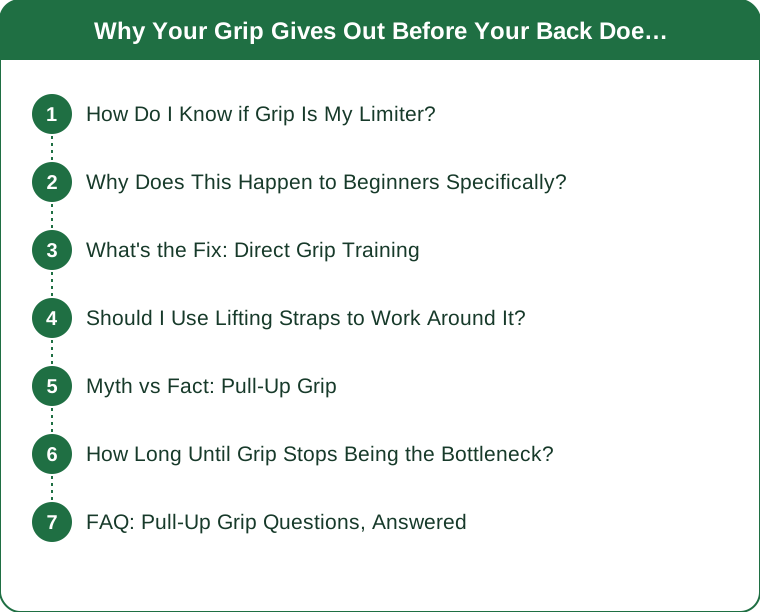
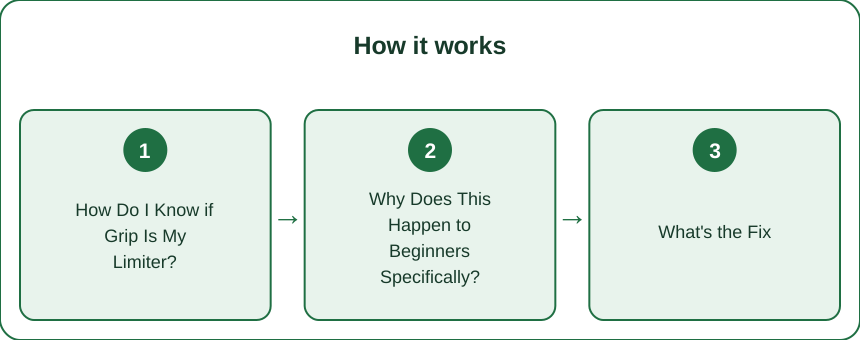
How Do I Know if Grip Is My Limiter?
Try a simple test: do a dead hang and time how long you can hold it. If you can’t hold a dead hang for at least 30-45 seconds, your grip endurance is very likely capping your pull-up sets before your back muscles are actually fatigued.
Why Does This Happen to Beginners Specifically?
Your forearm flexors are small muscles with limited endurance capacity compared to your lats, and most beginner training programs don’t isolate grip work at all — so grip strength lags far behind pulling strength for months. Experienced climbers and gymnasts rarely have this problem because grip work is built into their training.
What’s the Fix: Direct Grip Training
Add dead hangs (3 sets, working up to 45-60 seconds) and farmer’s carries twice a week. This builds forearm endurance independently, so it stops being the first thing to fail during your pulling sets.

Should I Use Lifting Straps to Work Around It?
Straps can help you train your back through fuller fatigue on isolated rowing movements, but avoid using them on pull-ups themselves early on — you actually need your grip to fail alongside your back sometimes, or it never catches up.
Myth vs Fact: Pull-Up Grip
Myth: A stronger grip won’t help you do more pull-ups, only back strength will. Fact: Grip endurance is frequently the limiting factor, not back strength, for beginners — improving it alone often adds reps without any additional back training.
Myth: Chalk fixes grip fatigue. Fact: Chalk improves friction on sweaty hands, but does nothing for the muscular endurance of your forearm flexors — it solves a slip problem, not a fatigue problem.
How Long Until Grip Stops Being the Bottleneck?
With consistent dead hang and carry work 2x a week, most people notice their hands stop failing before their back within 3-4 weeks. At that point, your pull-up progress starts reflecting actual back and lat strength instead of grip endurance.
FAQ: Pull-Up Grip Questions, Answered
Should I train grip before or after pull-up work?
After — training grip to failure first will artificially limit your pulling sets and reduce the back-strength stimulus you actually need.
Is a fat grip bar useful for this?
Yes, thicker bars increase forearm demand and can accelerate grip endurance gains, though a standard bar works fine too.
Can wrist wraps help with grip fatigue?
Wrist wraps support the wrist joint, not grip strength — they won’t meaningfully extend your hang time.
TL;DR:
- Most beginners’ pull-up sets end due to grip fatigue, not back fatigue
- Test it with a dead hang — under 30-45 seconds points to grip as your limiter
- Add dead hangs and farmer’s carries 2x a week, separate from pulling work
- Skip straps on pull-ups themselves early on
- Expect grip to stop being the bottleneck within 3-4 weeks of direct work
Keep Reading
This article is for general informational and styling purposes only. Fit, sizing, and product availability may vary.