Before Your First Pull-Up: Why the Dead Hang Is the Step Everyone Skips
Quick Answer: The dead hang is the pull-up’s true prerequisite: it builds the grip endurance (the actual first failure point for most women chasing pull-up one), teaches active shoulder engagement (the difference between hanging safely and hanging on your joint capsules), and conditions the tissues everything later loads. Progression: passive hang → active hang (shoulders pulled down) → 45-60 second holds → hanging scapular pulls — then the classic negative/band work finally sticks. Most stalled pull-up journeys skipped straight past this floor.
Every pull-up program starts with negatives and bands, and every gym has someone stuck at the same spot for months — shaking through band reps their grip and shoulders were never prepared to own. The unglamorous fix hangs at step zero, and it costs 90 seconds a session.

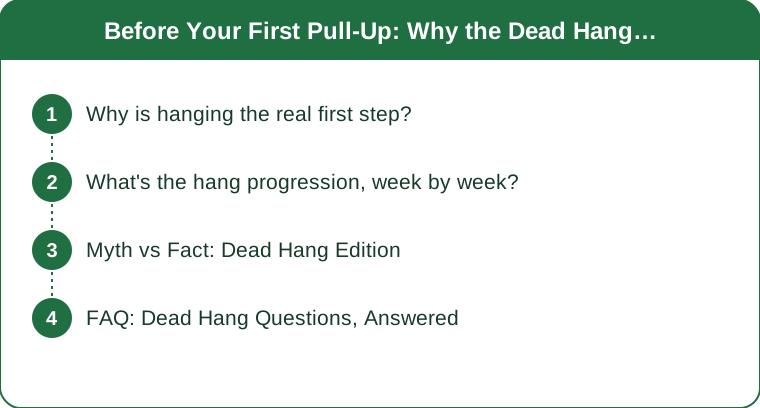
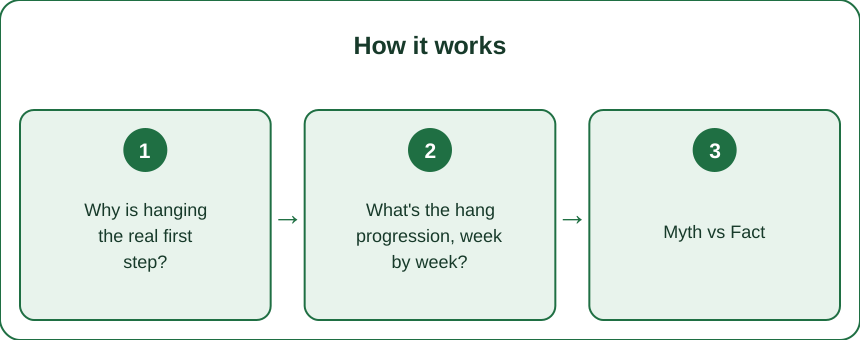
Why is hanging the real first step?
Three preparations nothing else provides:
- Grip is the secret gatekeeper: for most beginners — especially women, whose relative grip-to-bodyweight ratio is the common limiter — the hands fail before the back does. Every band rep and negative gets cut short by melting grip, which means the back muscles never receive their full training dose. A 45-second hang capacity is what lets a 5-rep negative set actually train the negatives.
- Active shoulders are a taught skill: a passive hang dangles on ligaments and joint capsule; an active hang — shoulder blades pulled down away from the ears, lats switched on — supports the load with muscle. That engagement is both the shoulder-safety foundation and, literally, the first inch of every pull-up. Skip it and you’re building reps on a disengaged base.
- Tissue timelines: tendons and connective tissue adapt slower than muscle — weeks of progressive hanging is exactly the on-ramp that lets elbows, shoulders, and wrists meet later intensity without the mysterious aches that derail week 6 of band programs.
The reframe: the hang isn’t a beginner’s consolation exercise — it’s the load-bearing test the rest of the building gets built on.
What’s the hang progression, week by week?
Stage 1 — Passive hang (week 1-2): grip the bar (overhand, about shoulder width), feet off, just hang — 3-5 sets of whatever you have (often 10-20 seconds at first), rest 60-90s between. Use a low bar or box so starting isn’t a jump. Target to advance: 30 seconds.
Stage 2 — Active hang (weeks 2-4): from passive, pull shoulder blades down and slightly together (ears move away from shoulders, chest lifts a touch) — hold that engagement. Harder than it sounds; alternate 5s active / 5s passive if needed. Target: 30-45 seconds mostly-active.
Stage 3 — Scapular pulls (weeks 3-6, overlapping): the active-hang engagement done as reps — from passive, pull the blades down to lift your body a few inches with straight arms, lower with control. 3 sets of 5-8. This is the pull-up’s ignition system trained in isolation.
Stage 4 — Graduate: with a 45-60s active hang and clean scapular pulls, the standard tools — negatives (slow 3-5s lowers), band-assisted reps, inverted rows — finally have the platform they assumed. Most people who stalled for months on bands report the difference immediately: sets end when the back fatigues, not when the hands quit.
Dosage note: hangs are grip-and-tendon work — 3-4 sessions weekly is plenty, and hands/elbows getting cranky means an extra rest day, not toughness. This is general information, not medical advice.

Myth vs Fact: Dead Hang Edition
Myth: Hanging is wasted time — just do assisted pull-ups from day one. Fact: Assisted machines and thick bands remove exactly the components the hang builds (full grip load, active shoulder control under bodyweight) — which is why machine-assisted progress famously fails to transfer. The hang isn’t a detour from the pull-up; it’s the part of the pull-up the assistance was hiding.
Myth: Longer hangs are always better — chase 2-3 minutes. Fact: Past ~60 seconds, the hang becomes a grip-endurance specialty with diminishing pull-up transfer — the graduation criteria are 45-60s active quality, then the training time belongs to scapular pulls and negatives. (Long hangs remain a fine shoulder-decompression practice on their own merits.)
Myth: Hanging hurts shoulders, so people with cranky shoulders should skip it. Fact: Passive dangling can aggravate; the active hang — the entire point of stage 2 — is broadly used in shoulder-health work precisely because it loads the joint in a supported, muscle-controlled way. Sequence matters: engagement first, duration second. Existing shoulder issues: get the starting position checked by a professional rather than guessing. This is general information, not medical advice.
The pattern: every myth routes around the unglamorous 90 seconds that makes the glamorous parts work.
FAQ: Dead Hang Questions, Answered
My hands hurt way before anything else — normal?
Completely — that’s the limiter revealing itself, which is the diagnostic value. Callus-friendly grip (bar in fingers-to-palm crease, not deep palm), chalk if available, and patience: grip endurance improves fast, typically doubling within 3-4 weeks of consistent hangs.
Should I use straps or grips to hang longer?
Not for this goal — outsourcing grip defeats half the exercise’s purpose. Straps have their place in later back-volume training; the hang phase IS the grip program.
How long from first hang to first pull-up?
Honest ranges: with the hang foundation plus standard negatives/band work, many women go from zero to one strict rep in 3-6 months depending on starting strength and bodyweight — and nearly everyone reports the post-hang phase moving faster than their previous skipped-straight-to-bands attempt. The floor was the shortcut all along.
TL;DR:
- Grip fails before back for most beginners — the hang fixes the gatekeeper so later sets actually train the target
- Progression: passive → active (blades down, ears tall) → scapular pulls → then negatives and bands finally stick
- Graduate at 45-60s active hang; longer is a specialty, not a requirement
- Hands and tendons adapt on their own clock — 3-4 sessions weekly, crankiness means rest
Months stuck at band-assisted reps versus 90 unglamorous seconds a session — the pull-up was waiting below the bar, not above it. This is general information, not medical advice.
Keep Reading
This article is for general informational and styling purposes only. Fit, sizing, and product availability may vary.