Your First Pull-Up: The Complete Roadmap for Women (Yes, You Can)
Somewhere along the line, the pull-up got mythologized as the one exercise women cannot do — a belief so common that gym classes institutionalized it with the flexed-arm hang. The physiology says otherwise: the female first pull-up is overwhelmingly a training problem, not a biology problem, and women who follow an actual progression get there reliably — typically in three to nine months from zero. It remains one of the most electric moments in any training life. Here is the complete roadmap.
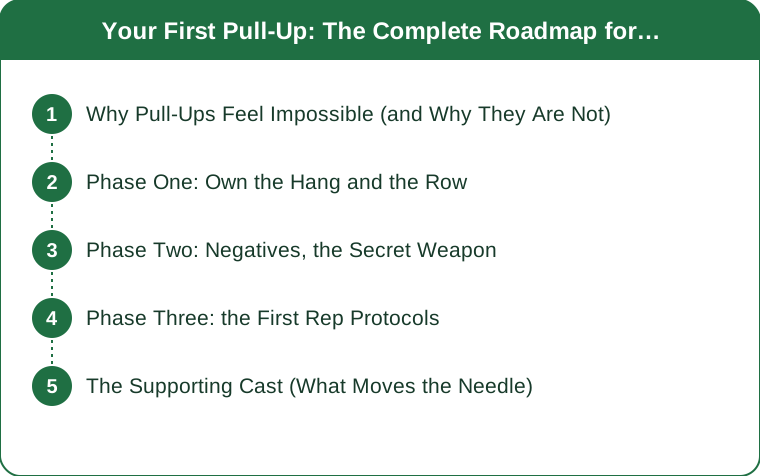
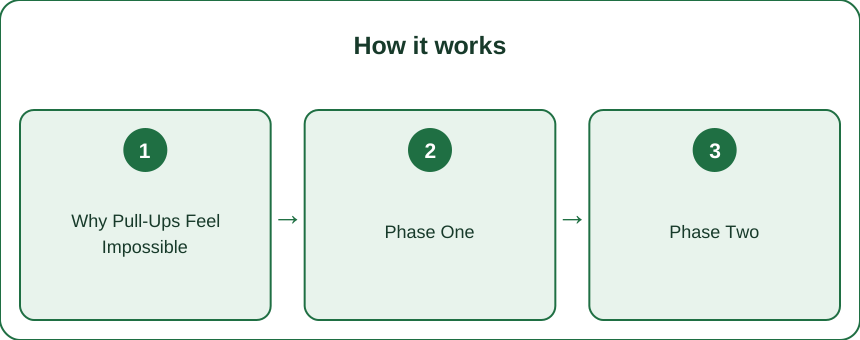
Why Pull-Ups Feel Impossible (and Why They Are Not)
The honest headwinds: women carry proportionally less upper-body muscle to start, and pull-ups lift your entire body weight — the hardest strength-to-weight equation in common exercise. The honest tailwind: muscle responds to progressive training identically regardless of sex, and the pull-up yields to the same patient overload as every other lift. The real reason most women have never done one is simpler and more fixable: nobody ever handed them the progression. Boys got told to practice; girls got handed the hang. The debt gets settled below.
Phase One: Own the Hang and the Row
Foundation weeks (roughly weeks 1–6): dead hangs — accumulate 60 seconds daily in sets of 10–20, building the grip and shoulder integrity everything rests on (shoulders active, not slumped into your ears); and horizontal rows — inverted rows under a bar or table, or heavy-ish dumbbell rows, 3 sets of 8–10 twice weekly, building the lats and mid-back that do pull-up heavy lifting. Milestone to advance: a 45-second unbroken hang and 10 clean inverted rows. Unsexy phase, load-bearing results — skipping it is why pull-up attempts stall for years.

Phase Two: Negatives, the Secret Weapon
The progression’s engine (weeks 6–16, give or take): jump or step to the top of the bar position — chin over, elbows bent — and lower yourself as slowly as physically possible, fighting every inch. Eccentric (lowering) strength builds faster than lifting strength, and slow negatives train the exact pulling pathway at full body weight. Protocol: 3–5 negatives of 3–8 second descents, twice or thrice weekly, fresh — never to failure-flailing. Support cast continues: rows, hangs, and band-assisted pull-ups (loop band under a knee) for pattern practice at reduced weight. When a negative takes eight-plus controlled seconds, the summit is close.
Phase Three: the First Rep Protocols
Closing the gap: chin-up grip first (palms facing you — biceps join the party, and most women’s first rep arrives underhand; fully legitimate, convert to overhand later), the flexed-arm-hang-plus (hold at the top, then micro-pull higher), and single greased-groove attempts — one maximal try, fresh, a few times weekly, never grinding to burnout. The day it happens is unmistakable: chin clears bar, world briefly mutes, and you will want witnesses (film your attempts — the failed-by-an-inch clips become the best before-footage). From one rep, the ladder to three, then five, is mercifully faster than the road to one.
The Supporting Cast (What Moves the Needle)
The force multipliers: body composition arithmetic works both directions — building pulling muscle and (if relevant to your goals) modest weight management both improve the strength-to-weight ratio, though the muscle side is the one to obsess over; protein and sleep are non-negotiable construction resources; and patience is programmed in — three to nine months is the honest median from true zero, faster with training history. What does not help: the assisted-pull-up machine as a sole strategy (too comfortable, poorly transferred), random max attempts without progression, and believing the myth this article opened with. The bar does not know your gender. It only knows whether you trained.
The first pull-up, mapped: hang and row until sturdy, negatives until slow, chin-up grip until victorious — three phases, a few months, one unforgettable rep. Start tonight with a dead hang and count your honest seconds; that number is your baseline, and it only moves one direction from here. The flexed-arm hang era is over. Chin over bar. It was always trainable, and it was always yours.
Keep Reading
This article is for general informational and styling purposes only. Fit, sizing, and product availability may vary.