Struggling to Get Your First Pull-Up? Here's the Real Bottleneck
Quick Answer: The most common bottleneck to a first pull-up isn’t overall back strength — it’s insufficient strength in the specific end range near full arm extension (a dead hang), where most of the pull-up’s hardest work happens. Negative pull-ups focusing on that bottom range close the gap faster than pulldowns alone.
You’ve built visible back strength through rows and pulldowns for months, and the first pull-up still won’t come. That’s because those exercises rarely train the exact range where most people actually fail.

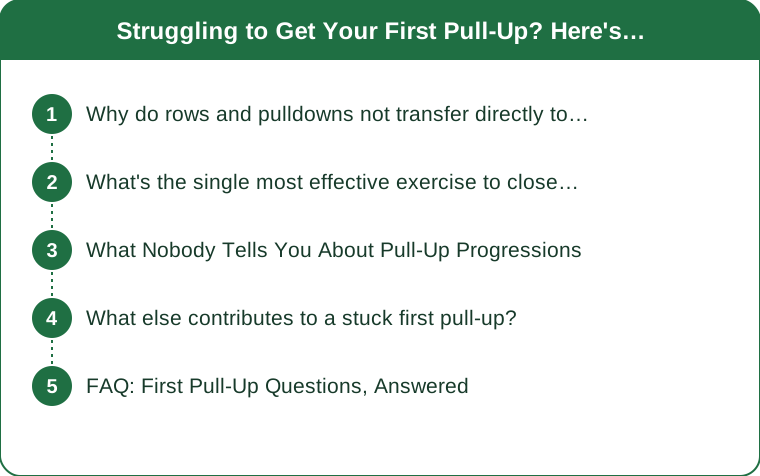
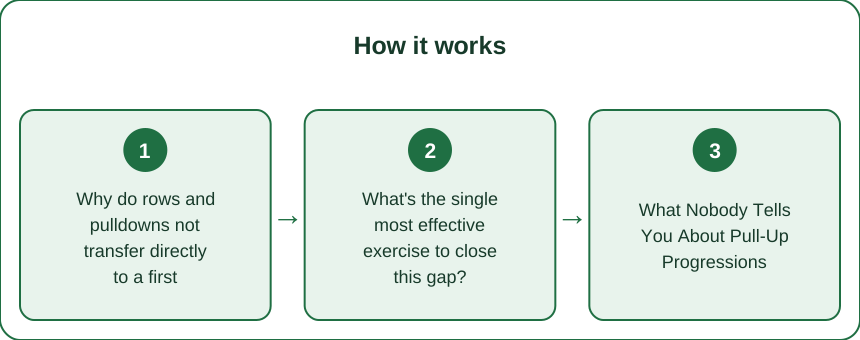
Why do rows and pulldowns not transfer directly to a first pull-up?
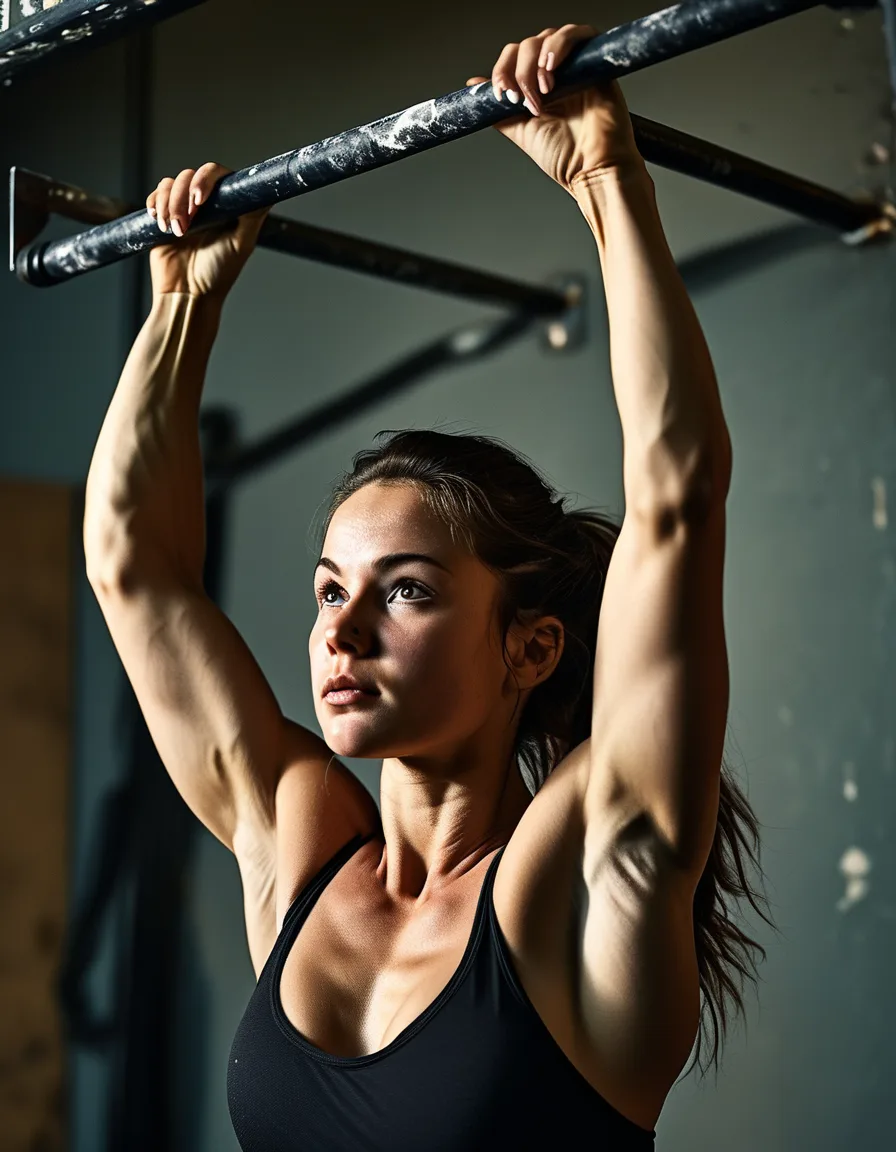
Pull-ups require pulling your entire bodyweight from a fully extended dead hang, which is mechanically much harder than the partial range and lighter relative load of most pulldown machines. The bottom portion of a pull-up — the first few inches off a dead hang — is disproportionately the hardest part, and it’s the part most gym exercises train the least.
This is a range-specific strength gap, not a general back-strength gap, which is why ‘getting stronger’ in other lifts doesn’t always convert to a first pull-up.
What’s the single most effective exercise to close this gap?
Negative (eccentric) pull-ups: start at the top of the bar (using a box or jump) and lower yourself as slowly as possible, especially through the bottom third of the range. This directly trains the exact strength curve a pull-up demands, more specifically than pulldowns or rows.
Aim for 3-5 second lowers, 3-5 reps, 2-3 times weekly — most people see their first unassisted pull-up within 6-10 weeks of consistent negative practice.
What Nobody Tells You About Pull-Up Progressions
Band-assisted pull-ups are the most commonly recommended progression, but bands provide the most assistance at the bottom (exactly where you need the least help proportionally) and the least assistance near the top — the opposite of where most people actually struggle. This is why some people plateau on bands for months without translating to an unassisted rep.
Negative pull-ups don’t have this mismatch problem, since gravity applies resistance consistently through the whole range you’re training.
What else contributes to a stuck first pull-up?
Bodyweight-to-strength ratio matters more here than in almost any other exercise, since you’re lifting 100% of your bodyweight. This doesn’t mean weight loss is required, but it does mean pull-up progress can plateau independent of strength training if bodyweight increases without a proportional strength increase.
Grip endurance is also an underrated factor — if your forearms fatigue before your back does, dead hangs (just hanging from the bar, building to 30-45 seconds) address that specific limiter.
FAQ: First Pull-Up Questions, Answered
How long does it realistically take to get a first pull-up from zero?
With consistent negative-focused training 2-3x weekly, most people who couldn’t do any pull-up progression see their first rep within 8-12 weeks, though starting strength varies this significantly.
Are assisted pull-up machines better than bands?
Machines that provide consistent assistance through the whole range (rather than variable band tension) more accurately mimic true pull-up strength curves, making them somewhat more effective for progression.
Should I train pull-ups every day to progress faster?
No — 2-3 times weekly with adequate rest between sessions builds strength more effectively than daily training, which risks overuse without allowing the strength adaptation to occur.
TL;DR:
- The bottom range near a dead hang, not overall back strength, is the real first-pull-up bottleneck
- Negative pull-ups train that exact range better than rows or pulldowns
- Band assistance mismatches the strength curve — it helps least where you need it most
- Grip endurance (dead hangs) and bodyweight ratio also factor into a stuck first rep
Switch focus to negatives and dead hangs — most people see their first rep within 2-3 months.
Keep Reading
This article is for general informational and styling purposes only. Fit, sizing, and product availability may vary.