Accessory Exercises to Get Your First Pull-Up
Getting your first pull-up is not just about doing pull-ups — the right accessory exercises build the specific strength that makes the movement possible. Adding them to your training speeds up your progress. Here is why accessory work helps, the exercises that build your pull-up, and how to put it all together.

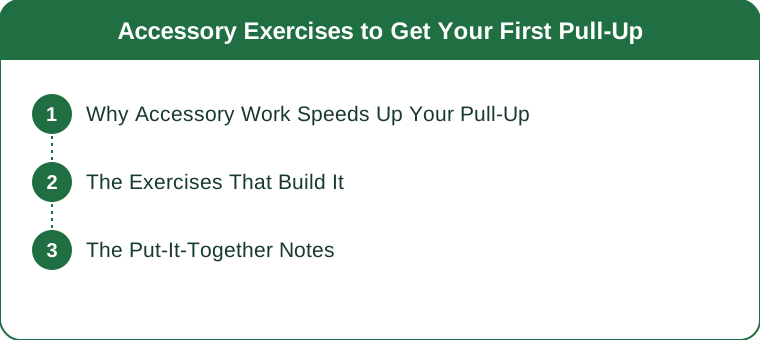
Why Accessory Work Speeds Up Your Pull-Up
Building the pieces: the the-pull-up-needs-multiple-strengths (the the pull-up requiring back, arm, grip and core strength together from the muscles-form logic — the the-multiple-strengths), the the-accessories-target-the-gaps (the accessory exercises building the specific muscles the pull-up needs from the first-pull-up logic — the target-the-gaps), the the-build-strength-you-cannot-yet-with-pull-ups (the building strength when you cannot yet do a pull-up from the assisted logic — the build-before-you-can-pull), the the-address-weak-links (the strengthening the weak links holding your pull-up back from the plateau logic — the fix-the-weak-links), the the-faster-progress (the accessory work speeding progress toward the first rep from the first-pull-up logic — the the-faster-path), and the reframe (the pull-up accessory work as building the specific back, grip and core strength the movement needs — a faster path to your first rep than just attempting pull-ups).

The Exercises That Build It
Accessory movements: the the-rows (the rows — inverted, band or dumbbell — building the pulling strength from the first-pull-up logic — the the-key-builder), the the-negatives (the slow pull-up negatives building the strength eccentrically from the negatives logic — the the-negatives), the the-band-assisted-pull-ups (the band-assisted pull-ups grooving the movement while building strength from the assisted logic — the the-assisted-reps), the the-dead-hangs-and-grip (the dead hangs building grip and shoulder strength from the grip-variations logic — the the-grip-work), the the-scapular-pulls (the scapular pulls training the first part of the movement from the muscles-form logic — the the-scapular-work), the the-lat-and-back-work (the lat and back exercises building the prime movers from the muscles-form logic — the the-back-builders), the the-core-work (the core strength to keep the body tight from the muscles-form logic — the the-core), and the the-progress-these-over-time (the progressively overloading the accessories from the plateau logic — the progress-them).
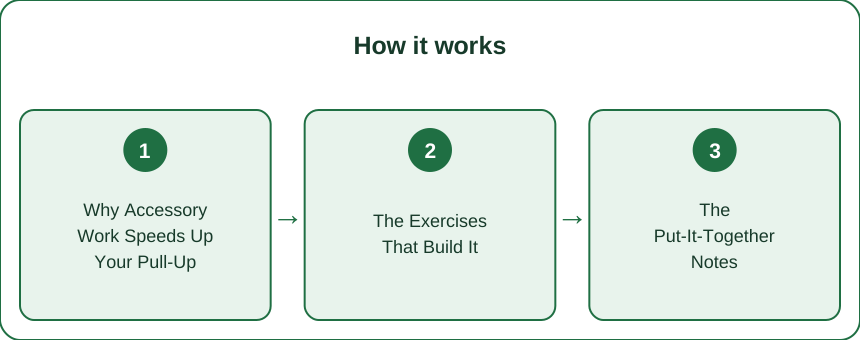
The Put-It-Together Notes
Building the plan: the the-combine-accessories-with-pull-up-practice (the pairing accessory work with band-assisted pull-ups and negatives from the assisted logic — the the-combination), the the-train-consistently (the training pulling a few times a week from the first-pull-up logic — the consistent-training), the the-progressive-overload (the adding reps, reducing assistance and increasing load over time from the plateau logic — the progress-it), the the-recover-between (the recovery for the back and arms to rebuild from the plateau logic — the recover-to-progress), the the-address-your-weak-link (the focusing on whichever strength is holding you back from the plateau logic — the target-the-limiter), the the-test-periodically (the testing an unassisted rep periodically from the first-pull-up logic — the check-progress), the the-be-patient (the the first pull-up taking weeks to months from the first-pull-up logic — the patience), and the frame (the pull-up accessory work as rows, negatives, dead hangs and scapular pulls combined with assisted practice and progressed over time — the fast track to your first rep. Combine accessories with band-assisted reps and negatives, train consistently, progressively overload, and target your weak link).
Getting your first pull-up is not just about doing pull-ups — the right accessory exercises build the specific strength that makes the movement possible, speeding up your progress. Accessory work helps because the pull-up needs back, arm, grip and core strength together, accessories build the specific muscles and address weak links, and they build strength when you cannot yet do a pull-up. The exercises that build it: rows (the key builder), slow negatives, band-assisted pull-ups, dead hangs for grip, scapular pulls, lat and back work, and core work — progressively overloaded. Put it together by combining accessories with band-assisted pull-ups and negatives, training consistently, progressively overloading, recovering between sessions, targeting your weak link, testing periodically, and being patient. The fast track to your first rep.
Keep Reading
This article is for general informational and styling purposes only. Fit, sizing, and product availability may vary.